
Beat the Heat! How to Help Someone Suffering from a Heat Emergency
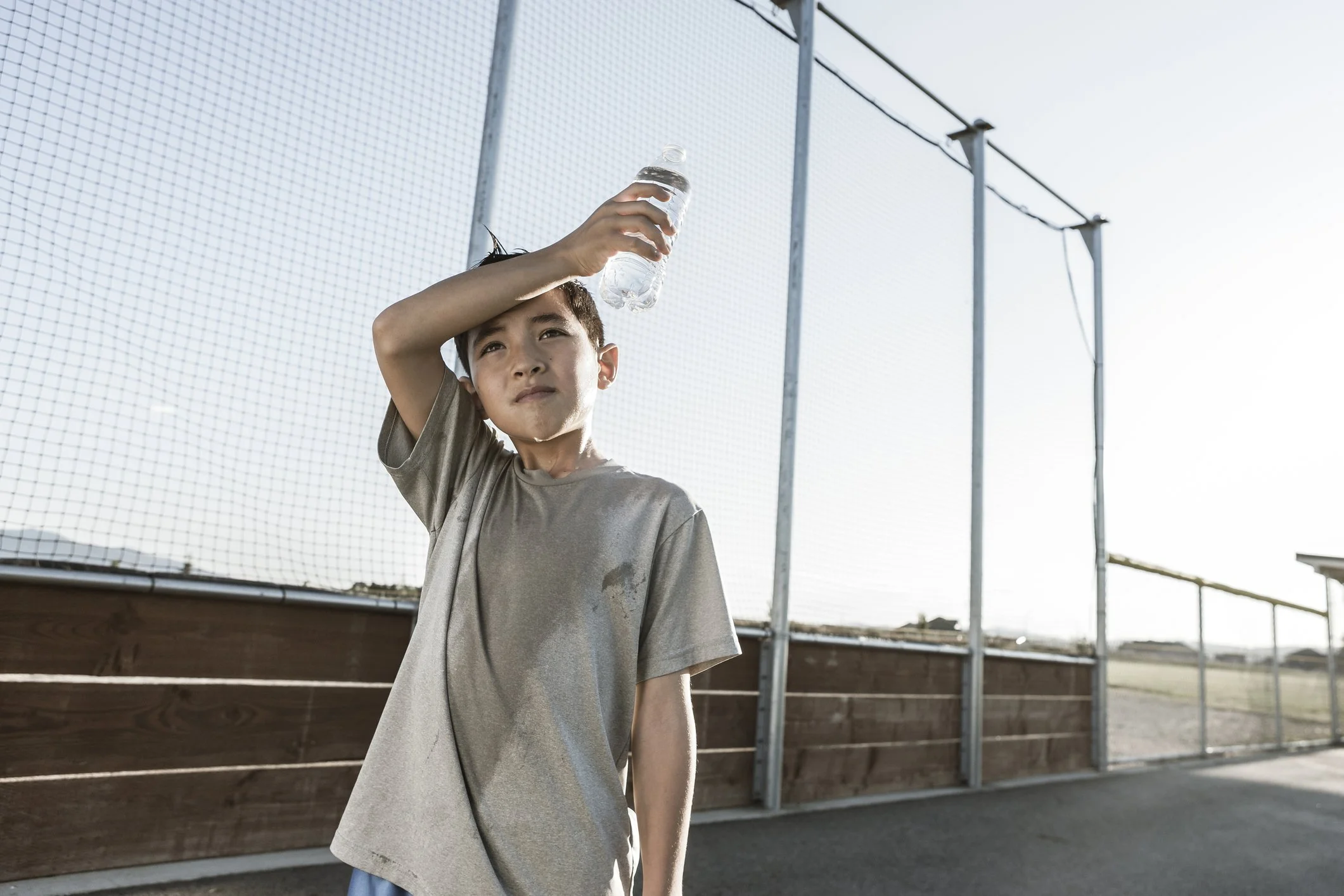
It's a sweltering hot summer day. You're walking on the white-hot sidewalk, sweat pouring down your face, when you suddenly notice a jogger hunched over on the ground. You approach her and notice that she's drenched in sweat -- her eyes are half-closed and she's mumbling incoherently. This is a serious medical emergency.
Heat emergencies occur when a person's body overheats from hot temperatures and dehydration. It is critical to identify early signs of a heat emergency because without early treatment, symptoms can worsen and become life-threatening. Your quick actions could save a life.
There are 3 types of heat emergencies in order from least-to-most severe:
Heat Cramps
Heat Exhaustion
Heat Stroke
1) Heat Cramps - An early sign that the body is having trouble with heat.
Signs: painful muscular spasms, usually in the legs or abdomen; often heavy sweating; the patient is awake and in a lot of pain.
Treatment:
Move the person to a shady or cool spot.
If the person is awake and able to swallow, give him slow sips of a drink containing electrolytes and carbohydrates (a commercial sports drink, coconut water or milk), or regular water.
Gently stretch the muscle and massage the area to relieve the cramps.
If the person becomes confused or unconscious, call 9-1-1.
2) Heat Exhaustion - More serious and can become deadly if left untreated.
Signs: cool, moist skin; headache; dizziness; weakness; nausea.
Treatment:
Move the person to a shady or cool spot.
Remove excess clothing.
Spray the person with cool water or apply cool wet cloths, and fan him.
If the person is awake and able to swallow, give him slow sips of a drink containing electrolytes and carbohydrates (a commercial sports drink, coconut water or milk), or regular water. Don't let the person drink too quickly.
If the person becomes confused or unconscious, call 9-1-1.
3) Heat Stroke - A life threatening emergency.
Signs: changed mental status (i.e. confusion, unresponsiveness, seizures); hot skin; vomiting; rapid breathing; difficulty seeing.
Treatment:
Call or have someone else call 9-1-1.
Move the patient to a cool area, if possible.
Rapidly cool the body using ice or cold water. Consider submerging the patient in a cool bath, or place ice cold compresses on the neck, armpits and groin. Do not pour water onto the head or face.
Continue rapidly cooling the person for 20 minutes or until the person can respond to questions.
Do not give the person anything to drink if they are not awake or cannot swallow.
If the person starts vomiting, roll them on their side to prevent them from choking.
If necessary, begin CPR.
Learn to Save a Life! Take a First Aid CPR AED Course Today!